FOUNDER STORY
A Data-Driven Climb to a Kilimanjaro World Record
What happens when a busy CEO uses epigenetic testing and AI — instead of elite training — to attempt something that probably doesn't make sense.
FOUNDER & CEO, TRUDIAGNOSTIC
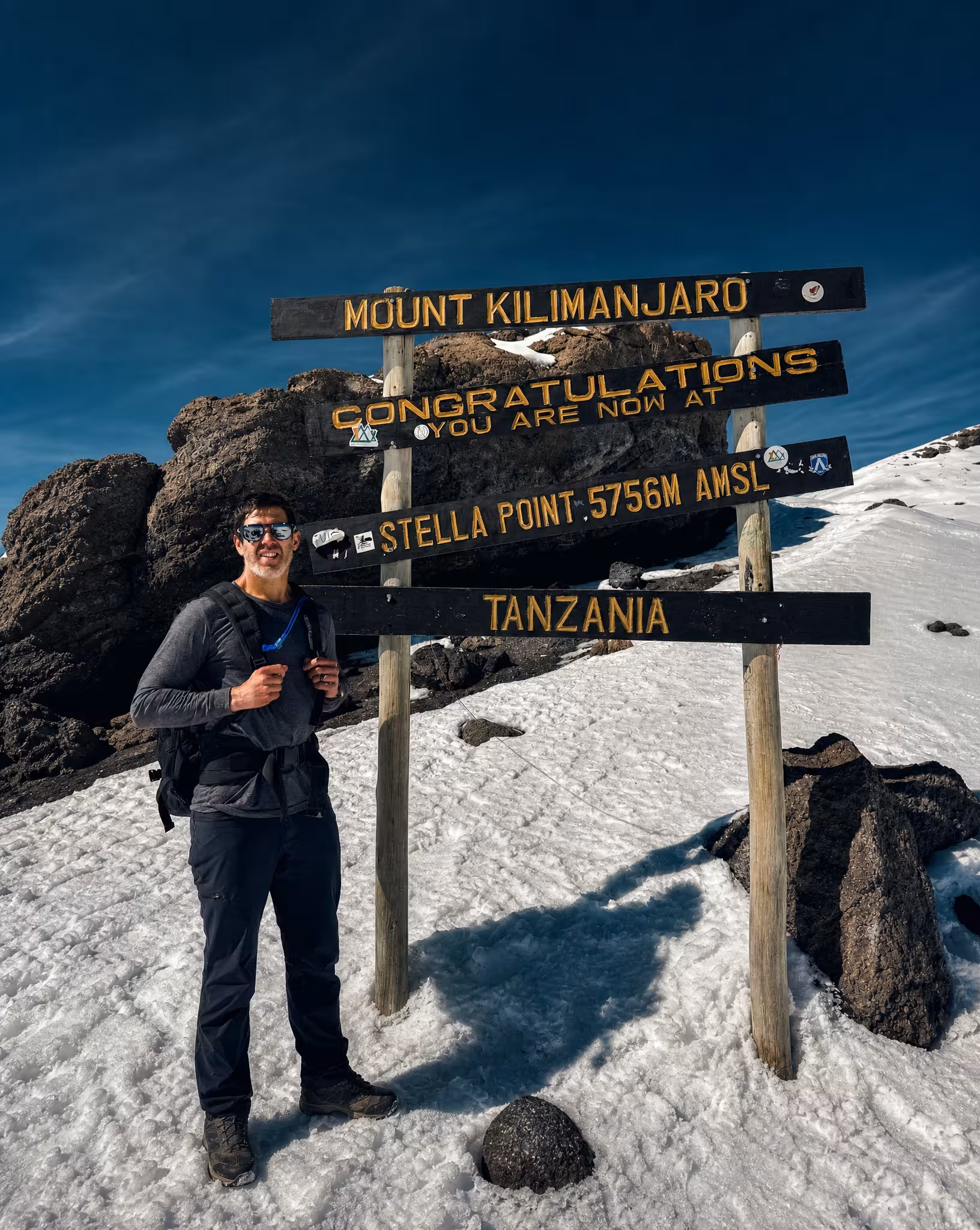
When Charlie Engle invited me to join a Kilimanjaro world-record attempt, my honest reaction was something like, "That sounds incredible, and I probably have no business being there."
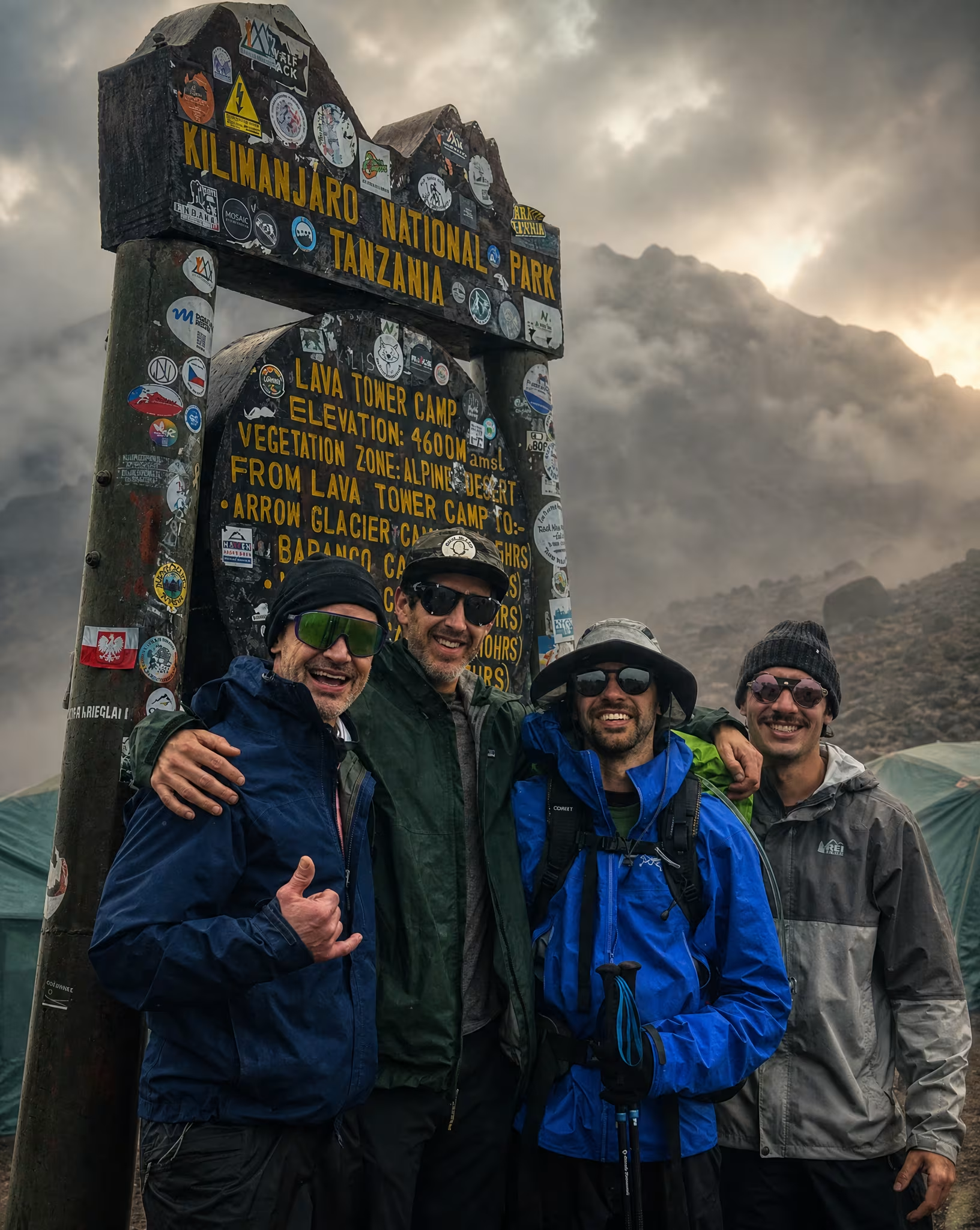
Charlie is a famous adventure racer. I watched the documentary Running the Sahara almost 20 years ago, where he and a small team ran across the Sahara Desert, which still seems like a completely reasonable thing for a human being to do, right? Since then, we'd become friends, and when he invited me to be part of this group, I was excited. I was also very aware of what kind of group it was.
The whole thing was organized by Dave Pickles, and he did an incredible job putting the group and entire experience together. The team included adventure racers, ultra-marathoners, Special Forces guys, people with serious mountain experience, people who were much better suited to this than I was.
I'm a CEO and a father of four. My kids are between 8 and 16. I run a company with around 100 employees. I love my work, and I love my family, and neither one of those things leaves a lot of open space for pretending I'm a full-time endurance athlete.
I'd done hard athletic things in the past. I played some college sports. I'd done a couple Ironmans and ultra-marathons. But that was a long time ago. I hadn't seriously trained for anything in well over a decade. And even when I did those events, I was never naturally good at endurance. I was never the guy who just showed up with some giant engine and made everyone else feel bad about their genetics.
I usually got through things by being obsessive, organized, and willing to suffer in ways that may or may not be psychologically healthy.
So when I looked at this Kilimanjaro team, I didn't think, "I'm going to be one of the top people here."
I thought: “This is going to be a very interesting science experiment.”
The goal was to set a group world speed record for ascending and descending Kilimanjaro. We first climbed the mountain on a normal acclimatization route, about seven days. Then we came down, turned around, and attempted to go up and down again in under 24 hours.
For the team record to count, at least four people had to finish within the time limit. I didn't assume I'd be one of them.
But that's what made it interesting.
I've found over the years that what drives me is doing epic things with people I love. And this was genuinely one of those things. It was also a chance to test something I believe pretty deeply.
I couldn't out-train the real endurance athletes
The obvious way to prepare for something like this would be to train a ton. That wasn't really available to me.
I couldn't disappear from my company for months. I couldn't take massive amounts of time away from my family. I couldn't build my life around training the way a professional or serious endurance athlete might.
So I had to get very serious about efficiency.
That's usually been my pattern in the past, by the way: train hard, push too much, ignore the warning signs, get injured, then act surprised even though the outcome was extremely predictable.
This time, I wanted to do it differently.
Through TruDiagnostic, I could run epigenetic testing on myself. I paired that with performance testing, VO₂ max, lactate threshold, muscular endurance, heart-rate drift, training volume, recovery metrics, nutrition, supplements, and notes about how I was actually feeling.
Then I used AI as a coach.
I don't mean that in a vague way. I created a project where I uploaded my epigenetic testing, training logs, performance results, nutrition, supplements, recovery, and plans. Every week or two, the plan would adjust based on the data.
If the data suggested I could push, I pushed. If the data suggested I was drifting toward too much stress or poor recovery, I pulled back.
The data made it harder to lie to myself. That was probably the biggest value.
Training had to fit inside real life
There was no heroic training montage.
A lot of the training was done on a treadmill desk. I put my laptop on the treadmill, set the incline to 15%, stayed in zone 2, and worked while I climbed. That let me get long sessions in without disappearing from work or family for four or five hours.
When I went hiking with my family, I'd wear a rucksack with 50 pounds in it. That way I could go at a normal family pace and still get a useful training stimulus. I'm sure I looked ridiculous, but I have four kids, so looking ridiculous isn't exactly new territory.
I also built the training around my actual schedule instead of pretending I lived in some fantasy version of my life. If we had a company off-site or a family trip, that became a deload week. If work was especially intense, I adjusted. If the data showed I needed more recovery, I tried to listen.
This was the first time I trained seriously for something and didn't get injured.
That may not sound as exciting as a world record, but honestly, it might be just as meaningful to me. Because at my stage of life, getting fitter while staying healthy is the whole game.
What the data actually did on the mountain
On the mountain, that data mattered constantly.
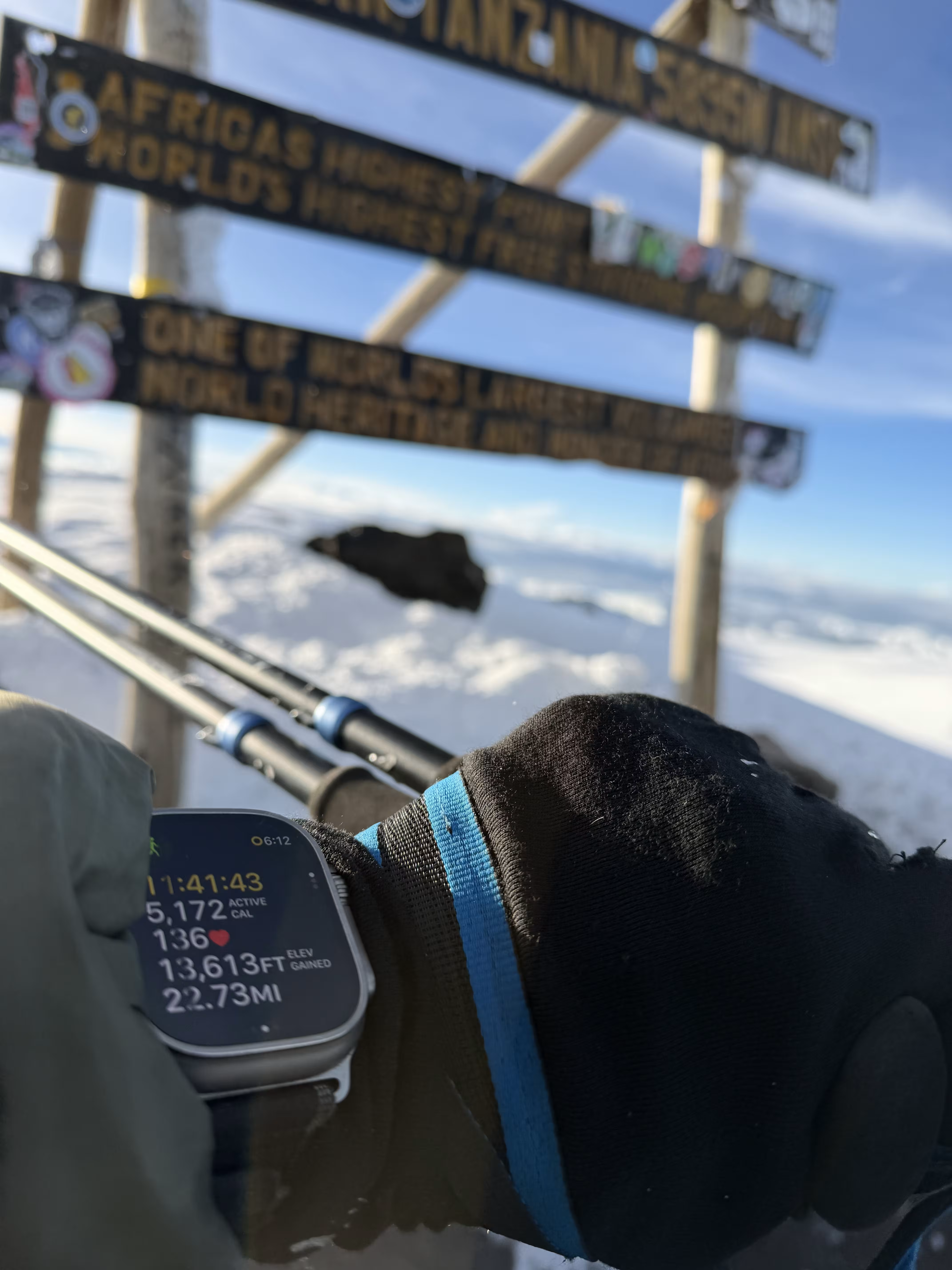
I was checking my heart rate every few minutes. I knew my zones. I knew what intensity I could sustain. I knew what kinds of calories I could take in at different heart-rate ranges. We had trained that. It wasn't theoretical.
People tend to think these kinds of events are mostly about mental toughness. They are, of course. But they're also very much about eating. A 24-hour mountain effort is basically an eating contest with a lot of uphill walking attached to it.
During the climb, I paid close attention to heart rate, pacing, digestion, and calories. I was constantly trying to stay in the range where I could keep moving and keep absorbing fuel.
That wasn't glamorous. It wasn't some cinematic moment where I stared at the summit and discovered my inner warrior.
It was more like: "Can I keep my heart rate where it needs to be, get these calories down, and not do anything stupid for the next few hours?"
Less poetic. Much more useful.
The part I'm proud of
A large group started the speed attempt. Only a handful finished within the required window. We had enough finishers to set the group world record.
And I was one of them.
That still feels strange to say, because I really don't think I should've been one of the people in that finishing group if you just looked at the obvious inputs.
I didn't have the most time to train. I wasn't the most experienced mountain athlete. I wasn't the strongest endurance athlete. I wasn't living the lifestyle of someone built around performance.
I was a busy CEO and dad trying to squeeze serious training into the margins of a very full life.
The reason I'm proud of it isn't because I suddenly became an elite athlete. I didn't. No one watched me climb and thought, "There goes Kilimanjaro's most graceful gazelle."
That was not the vibe.
I'm proud because it showed me that with the right data, the right feedback loops, and the willingness to actually listen to what your body is telling you, you can often do more than you think.
Not magically. Not easily. Not without work. But more.
You don't have to be an elite athlete to take your health seriously. You don't need unlimited time. You don't need to guess your way through training, recovery, nutrition, or performance.
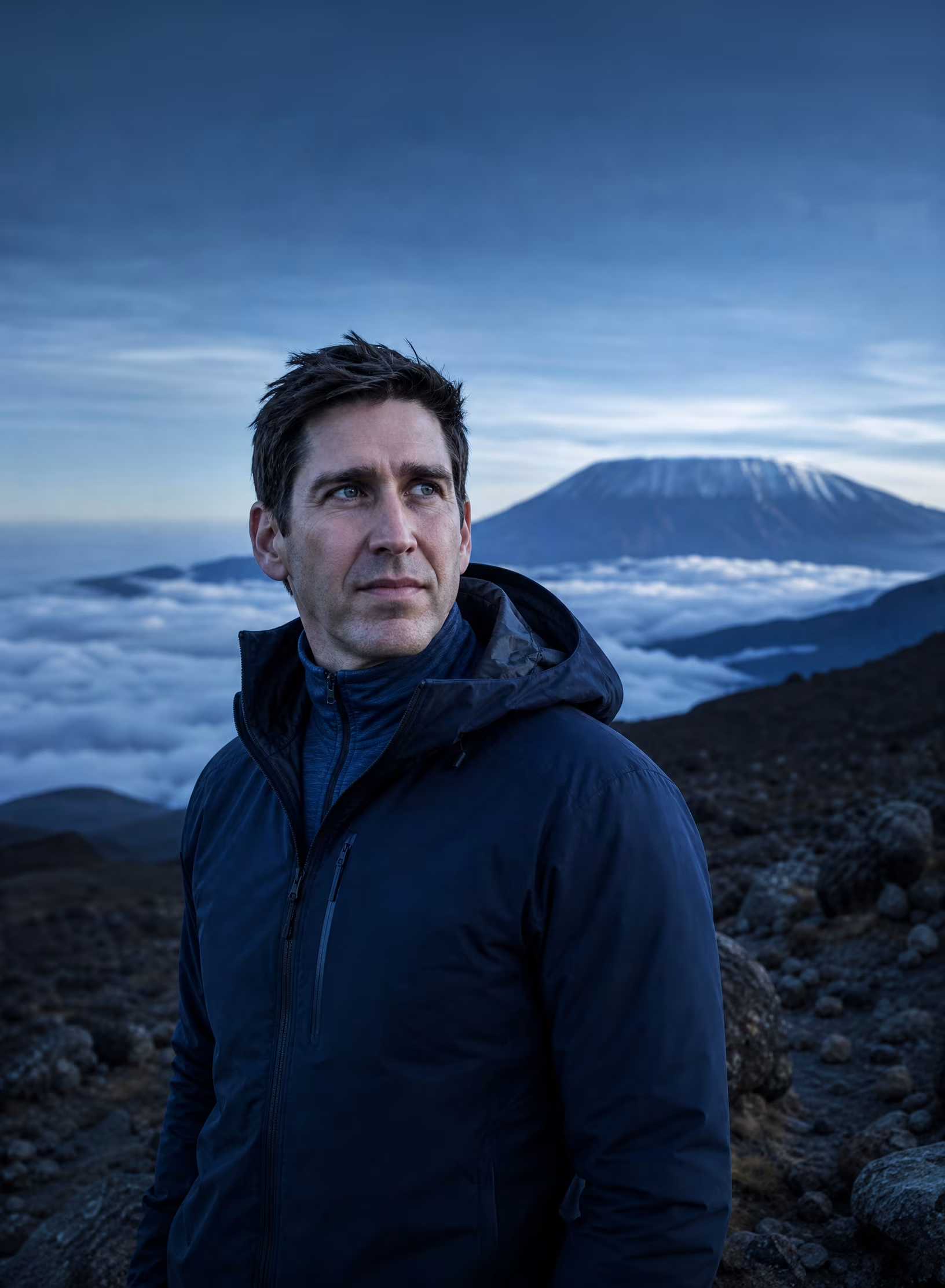
What I think this actually means
I want to be careful about the claim here.
This doesn't prove that an epigenetic test can make someone climb Kilimanjaro fast. It doesn't prove AI is magic. It doesn't prove everyone should go attempt a world record on a mountain.
For me, the value wasn't just having data. The value was using the data to change behavior. It helped me decide when to push and when to recover. It helped me understand stress. It helped me dial in nutrition and supplements. It helped me pace better. It helped me avoid the injury pattern I'd fallen into so many times before.
Most people aren't trying to set a Kilimanjaro world record. Most people are trying to be healthier, perform better, recover better, and keep up with the demands of their actual life.
They have jobs. Families. Stress. Travel. Bad sleep. Too much to do. Bodies that don't respond exactly like they did 15 years ago (which is rude, but apparently universal?).
The future of health isn't just getting more data. Most people already have more data than they know what to do with.
The real value is turning data into decisions.
What should I do this week? Am I adapting or am I overtraining? What's my body missing? Where am I under-recovered? What should I change before something breaks?
That's what I care about.
The lesson I want people to take from this
This climb gave me a very personal version of that lesson. I used epigenetics, performance testing, and AI to train in a way that fit my real life. Then I got to test it in one of the most unforgiving ways possible.
And somehow, it worked.
I got to do something epic with people I love. I helped set a group world record on Kilimanjaro. And I proved to myself that I was capable of more than I thought, as long as I was willing to stop guessing and actually listen to the data.
You need better information, better interpretation, and enough humility to follow the evidence when it tells you something inconvenient.
That last part is usually where the trouble starts.
But it's also where the progress starts.
Matt Dawson
Matt is the founder and CEO of TruDiagnostic, an epigenetics lab that commercializes biological age and health testing backed by research from Harvard, Yale, and Duke. He is a father of four, a former Ironman finisher, and, as of this year, a Kilimanjaro world record holder. He did not expect that last one.