TruDiagnostic’s Aging Clock Captures the Impacts of A Vegan Diet
.png)
Summary Snapshot
Study Type: Randomized Controlled (Paired Twin) Trial
Sample Size: 42 participants (21 twin pairs)
Duration: 8 weeks
Primary Endpoint: 8-week change in DNA methylation profiles from baseline; also assessed biological clock aging and telomere length
The DNA Methylation Edge
While capturing the overall biological aging for people on a vegan vs. omnivorous eating plan, TruDiagnostic’s research team used DNA methylation to bundle multiple age clocks together and gain a granular picture of subjects’ inflammation levels and cardiac health. Conducting this work without using age clocks would not have been as nuanced or precise, and it would have been more difficult to establish meaningful associations between eating patterns and cellular functions.
Objective & Rationale
Study Goal and Scientific Context: The study aimed to measure the effects of an 8-week healthy vegan or omnivorous diet on blood DNA methylation in identical twins, focusing on slowed or accelerated aging as indicated by epigenetic methylation and related biomarkers. This trial addressed how a vegan nutritional plan is expressed by epigenetic mechanisms and may influence biological aging and the healthspan.
Methodology
Design: Single-site, parallel-group dietary intervention trial with twin-pair randomization to control for genetic, age, and sex differences.
Population: Generally healthy adults aged ≥18 (mean age 39.9 years, 77.3% women), BMI <40, LDL-C <190 mg/dL, excluding subjects with uncontrolled hypertension, metabolic diseases, pregnancy, and weight-affecting medications.
Intervention: The vegan group adhered to a plant-based diet while the control group followed a healthy omnivorous diet. Diet quality was monitored via 24-hour recalls and the Cronometer app.
Duration: 8 weeks
Epigenetic Measurements: DNA methylation was assessed via Infinium HumanMethylationEPIC BeadChip; epigenetic clocks used included PC GrimAge, PC PhenoAge, DunedinPACE, and systems-specific clocks (e.g., Inflammation, Heart). Telomere length was assessed via qPCR and PC DNAmTL.
Key Findings
Results: Not only did vegan participants see improved biological aging, but they also experienced increased telomere length by qPCR (but not by PC DNAmTL), with diet-specific shifts in methylation surrogates and differentially methylated loci. Basophil levels increased in vegans and decreased in omnivores, while certain epigenetic biomarker proxies showed decreases in CRP and increases in spermidine in vegans. Findings for specific loci were nuanced, calling for more advanced studies on methylation patterns and potential confounding factors.
Standard Metrics: % change in biological age, direction of effect, significance
- Vegan group: Epigenetic age acceleration of −0.3011 years as determined by PC GrimAge; −0.7824 years by PC PhenoAge; −0.0312 DunedinPACE; telomere T/S ratio of 0.0361, indicating increased length.
- Omnivorous group: No significant changes in epigenetic clocks or telomere measures.
Academic Significance: By using identical twins, this intervention eliminated many potential confounders, bolstering confidence that observed impacts were attributable to the intervention. Though nutritional research can be complex, this study captured significant outcomes and indicates promising areas of further research.
Clinical Significance: Though the intervention did not capture long-term impacts, indicators of the intervention’s effects in the short term indicate clinicians could advise clients to adopt a vegan diet, particularly with monitoring for B12 and other supplements, to slow biological aging and enhance their health spans.
The Twins Vegan Study establishes causal sensitivity; the next question is whether these signals generalize beyond a single intervention.
Case Study
Scaling Intervention Insight Across Dietary Patterns
TruDiagnostic conducted a large-scale meta analysis, spanning 11 distinct eating plans using multiple epigenetic aging clocks, shown in the heatmap below.
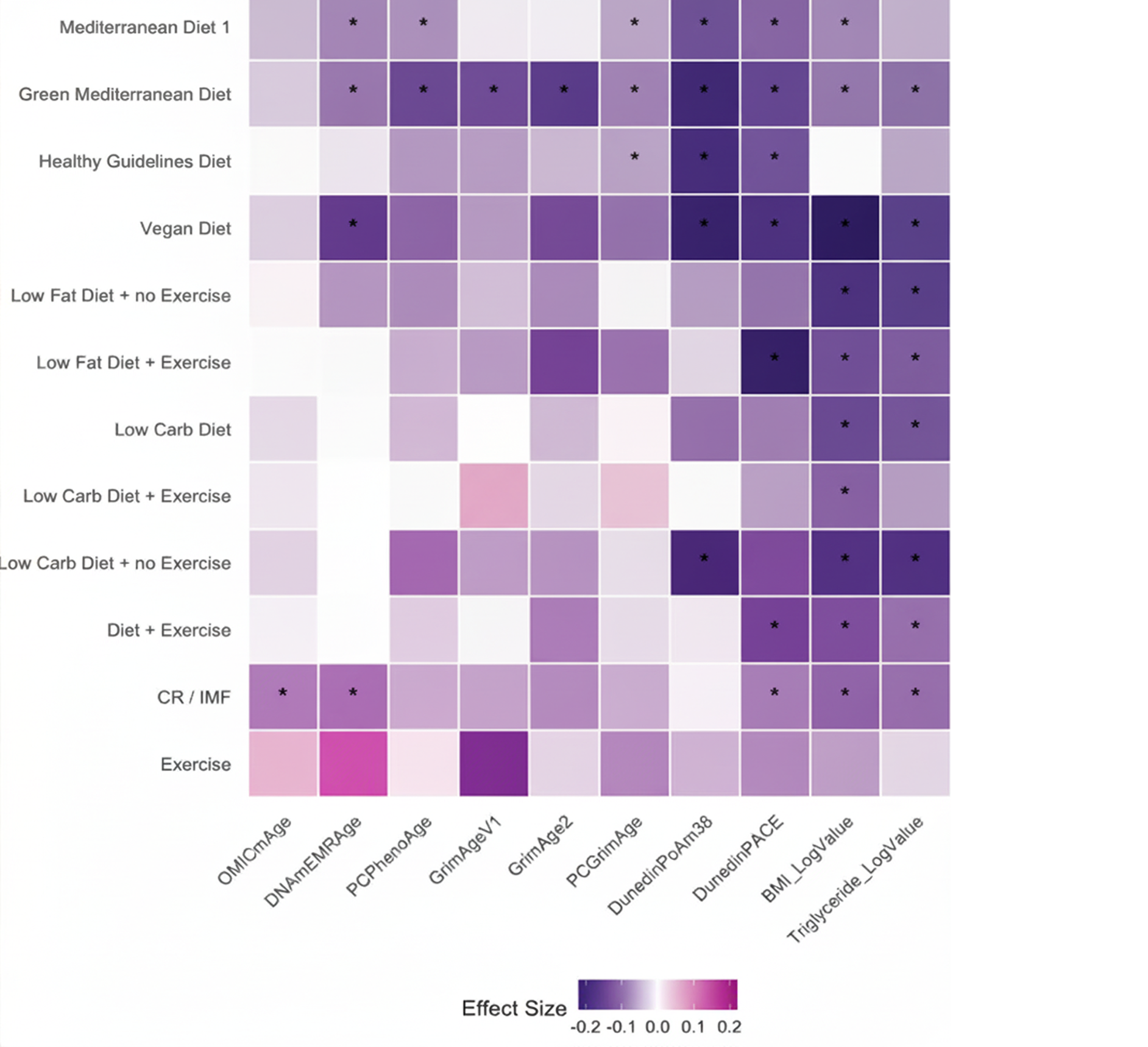
This analysis revealed that our DunedinPACE aging speed algorithm is the most responsive clock to dietary change, while the Green Mediterranean diet showed the most consistent impact across multiple clocks. These findings align with existing clinical literature on Mediterranean-style diets, reinforcing the biological validity of the methylation signals observed.
Because these studies varied in population size, demographics, and study design, results should not be over-interpreted individually. However, the convergence of signals across heterogeneous cohorts highlights DNA methylation’s ability to surface consistent, biologically meaningful patterns at scale.
Beyond aging clocks, TruDiagnostic applied Epigenetic Biomarker Proxies (EBPs) to further interrogate diet-linked biology. Key metabolic markers such as adiponectin and lipoprotein lipase (LPL) showed coherent shifts across dietary patterns –reflecting known roles in insulin sensitivity, lipid metabolism, and inflammatory regulation. These findings underscore how DNA methylation can reveal mechanistic insight alongside high-level aging outcomes.
.png)
Together, this work demonstrates that DNA methylation supports not only controlled interventional trials, but also population-level analyses capable of informing nutritional strategy, hypothesis generation, and future personalized intervention frameworks
Extending DNA Methylation Toward Personalized Nutrition
Beyond population-level analysis, DNA methylation opens the door to more individualized interpretations of diet and health risk. By pairing self-reported nutritional data with Epigenetic Biomarker Proxies (EBPs), TruDiagnostic is exploring how specific dietary patterns and metabolites manifest at the molecular level.
Certain EBPs – such as markers linked to polyphenols or amino acid derivatives – show consistent associations with reported food intake, enabling inference of dietary exposure and biological response without relying solely on self-reporting. These relationships provide a foundation for stratifying individuals by metabolic response rather than diet labels alone.
.png)
Looking ahead, these insights can be integrated with Methylation Risk Scores (MRS) and aging clocks to inform precision-focused hypotheses, such as identifying dietary patterns that may mitigate risk in populations predisposed to conditions like neurodegeneration or cardiometabolic disease. Together, this approach illustrates how DNAm-enabled datasets can evolve from measurement tools into decision-support layers for future interventional design.
Related Studies
.png)
.png)
.png)
