.png)


.png)
.png)
.png)
.png)
.png)
The Most Trusted Biological Age Test

.png)




What Epigenetics Reveals about Aging
The Results of Epigenetic Testing


How TruAge Benefits Your Clinic
An initial test establishes where your patient stands biologically today, giving you the clinical anchor that turns every follow-up visit into a progress conversation.
When your patient’s history and labs leave the picture incomplete, fill the gaps with the biological context you need to build a care plan that actually fits.
Show whether the protocols you’re recommending are actually working at the biological level, giving your patients evidence that lifestyle changes are making a measurable difference.
When a patient has multiple concerns, testing helps you see which biological systems need the most attention, turning a complex clinical picture into a clear set of priorities.

How does TruAge work?

Order TruAge for Your Practice

Patient Sample Collection

Receive Actionable Results
The Aging Clocks of TruAge
Biological Age
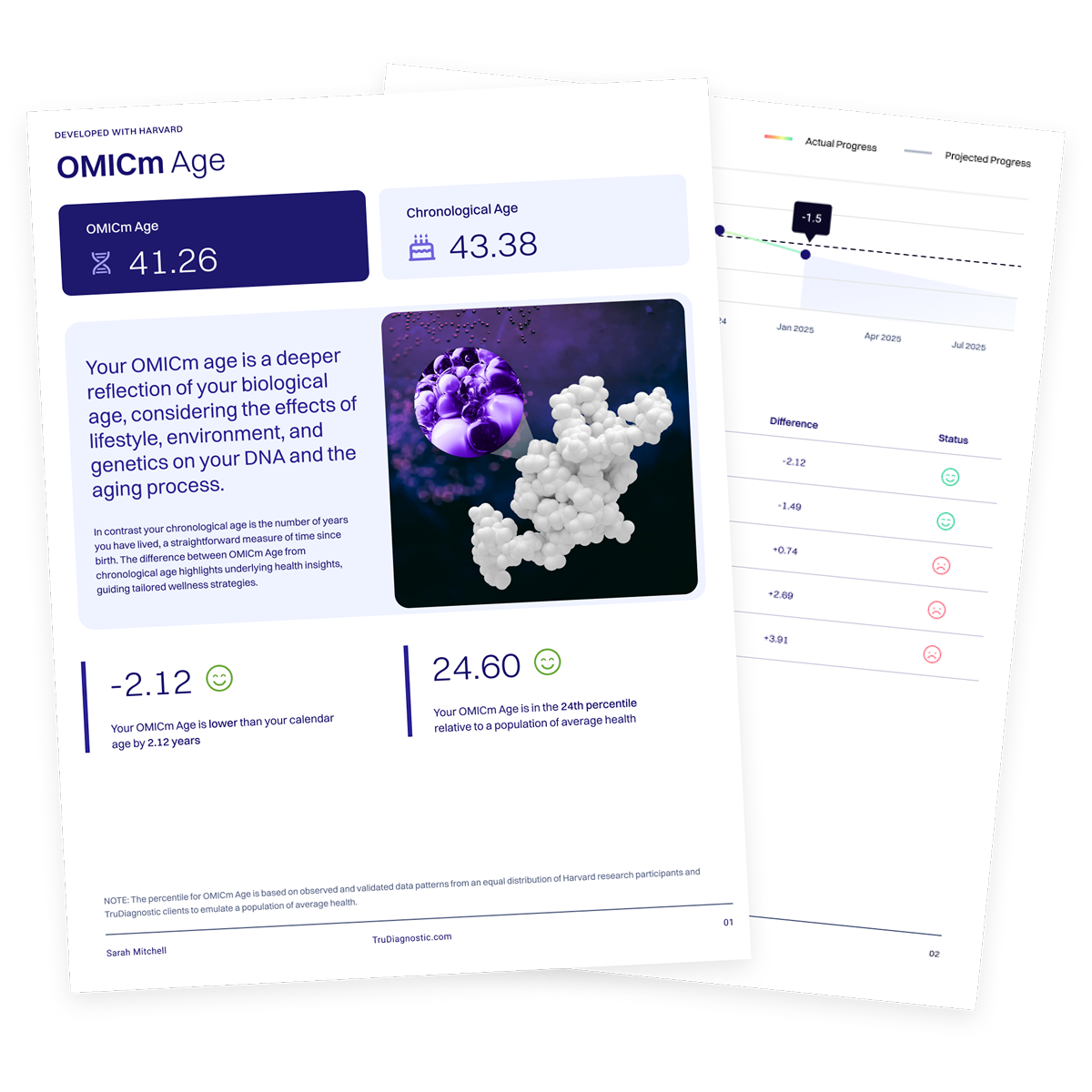
The OMICmAge™ algorithm is one of the most precise and comprehensive methods for measuring biological aging. Its multi-omic approach analyzes proteins, metabolites, and clinical biomarkers to reveal the true state of the body’s aging process — and the factors accelerating or decelerating it — empowering you to optimize patient health and potentially slow aging.
Organ System Aging
SYMPHONYAge™ offers a revolutionary way to understand aging across multiple organ systems. This system-specific epigenetic algorithm evaluates organs like the brain, liver, heart, and immune system independently, pinpointing where targeted health interventions may be most effective. Easy-to-read reports deliver actionable recommendations and highlight key areas for improvement, allowing providers to direct protocols to where biological burden is the highest.

Aging Speed
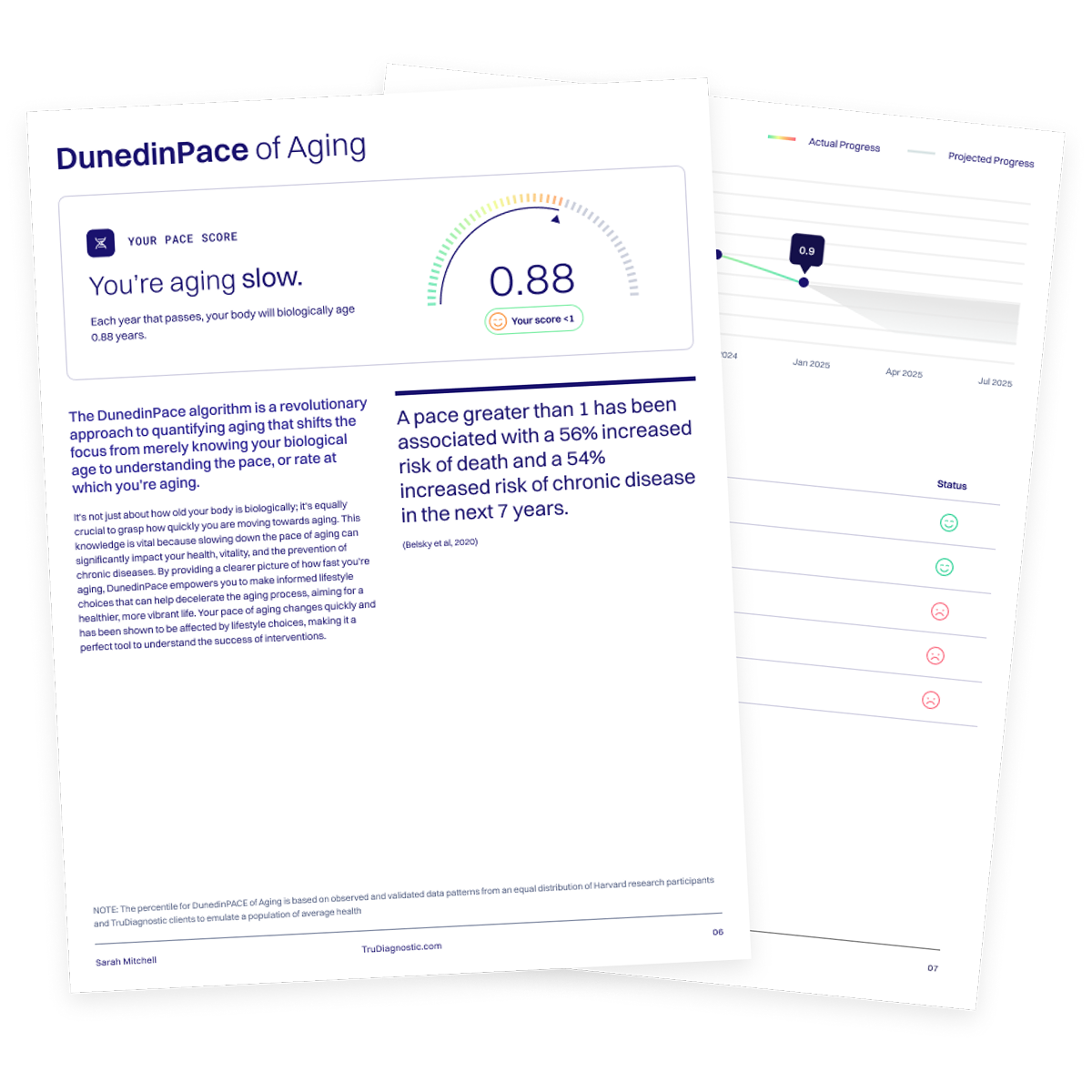
The DunedinPACE™ algorithm measures the rate at which the body is aging, providing a clear picture of whether you’re aging faster, slower, or as expected for your calendar age. It’s ideal for tracking the effectiveness of lifestyle and protocol interventions over time — regular monitoring shows how lifestyle and other interventions may impact biological age, giving patients the data and motivation to stay on track.
Why Physicians Choose TruAge
FAQs
TruAge measures biological age, aging speed, and organ-level aging through multiple aging clocks and epigenetic biomarker panels. All TruAge reports include three core aging clocks, each analyzing a distinct set of biomarkers from a single blood sample:OMICmAge™, our primary biological age clock developed with Harvard, analyzes epigenetic biomarkers spanning proteins, metabolites, and clinical measures: Albumin, Hemoglobin, HbA1c, Hematocrit, Blood Urea Nitrogen, Alkaline Phosphatase, IGFBP-2, Carboxypeptidase B2, Serum Paraoxonase/Arylesterase 1 (PON1), Ribonuclease Pancreatic, Inter-Alpha-Trypsin Inhibitor Heavy Chain H3 (ITIH3), Ribitol, Phenylacetylglutamine, Uridine, 4-Methoxyphenol Sulfate, 1-Margaroyl-Glycerophospholipid (GPE)(17:0), Vanillactic Acid, Red Blood Cell Distribution Width, Creatinine, Fasting Glucose, Carotene Diol, Bone Morphogenetic Protein 1 (BMP1), Versican Core Protein, N-Acetyl-Isoputreanine, Gluconate, 4-Hydroxyphenylacetylglutamine, Androsterone Sulfate, 3-Ureidopropionate, 1-Stearoyl-2-Adrenoyl-GPC (18:0/22:4), and Histone H2B Type 1-K.DunedinPACE™, our aging speed clock developed with Duke, uses DNA methylation patterns across the epigenome to calculate your patient's pace of aging – the number of biological years elapsed per calendar year – providing a dynamic rate of aging rather than a static biological age estimate.SYMPHONYAge™, our organ-level age clock developed with Yale, analyzes clinical biomarkers across 11 organ systems:
- Blood: Ferritin, Hematocrit, Hemoglobin, Mean Corpuscular Hemoglobin, Mean Corpuscular Hemoglobin Concentration, Mean Corpuscular Volume, Mean Platelet Volume, Platelet Distribution Width, Platelet Count, Red Blood Cell Count, Red Cell Distribution Width
- Brain: Homocysteine, BDNF (serum), Clusterin, Stroke, Total Mental Status Summary Score, Total Cognition Summary Score, Immediate Word Recall, Delayed Word Recall, Total Word Recall Summary Score, Serial 7s
- Inflammation: Ferritin, C-Reactive Protein, Transforming Growth Factor Beta, Interleukin-10, Interleukin-1 Receptor Antagonist, Interleukin-6, Tumor Necrosis Factor Receptor 1
- Heart: Shortness of Breath While Awake, PC Components of GrimAge, Previous High Blood Pressure, Previous Heart Attack, Previous Stroke, Homocysteine, BMI
- Hormone: IGF-1, DHEA-S
- Immune: Eosinophil Count, Lymphocyte Count, Monocyte Count, Neutrophil Count, Percent Basophils, Percent Eosinophils, Percent Lymphocytes, Percent Monocytes, White Blood Cell Count, Myeloid Dendritic Cells (DC-M) Percentage, Plasmacytoid Dendritic Cells (DC-P) Percentage, NK Cells CD56HI Percentage, NK Cells CD56LO Percentage, CD16- Monocytes Percentage, CD16+ Monocytes Percentage, B Cells Percentage, CD8+ T Cells Central Memory Percentage, CD4+ T Cells Central Memory Percentage, CD8+ T Cells Percentage, CD8+ T Cells TemRA Percentage, CD4+ T Cells TemRA Percentage, CD4+ T Cells Percentage, IgD+ Memory B Cells Percentage, IgD- Memory B Cells Percentage, CD8+ T Cells Naïve Percentage, CD4+ T Cells Naïve Percentage, T Cells Percentage, Naïve B Cells Percentage, CD8+ T Cells Effector Memory Percentage, CD4+ T Cells Effector Memory Percentage, Natural Killer (NK) Cells Percentage, Monocytes Percentage, Dendritic Cells Percentage
- Kidney: Albumin, Urea Nitrogen, Chloride, Bicarbonate, Creatinine, Cystatin C, Potassium, Sodium
- Liver: Albumin, Alkaline Phosphatase, ALT, AST, Bilirubin, Total Protein
- Metabolic: PC Smoking Pack-Years, Previous Diabetes, C-Reactive Protein, Fasting Glucose, HDL Cholesterol, LDL Cholesterol, Triglycerides, Interleukin-6, BMI, Waist Circumference
- Lung: Peak Expiratory Flow, Bicarbonate, Chronic Lung Disease, Shortness of Breath While Awake, Persistent Wheezing/Cough/Phlegm, PC Smoking Pack-Years
- Musculoskeletal: Vitamin D3, DHEA-S, IGF-1
TruAge measures biological age through DNA methylation (DNAm) analysis – a chemical tagging system cells use to regulate gene activity. Rather than analyzing genetic sequence, TruAge reads epigenetic patterns across more than 1,000,000 sites on a patient's DNA. These patterns shift with age, lifestyle, and environment, making them a more dynamic and clinically meaningful signal than a birth date alone.
Aging is the single largest risk factor for all-cause mortality and most chronic disease. But chronological age – the number a patient celebrates on their birthday – tells you very little about their current biological health trajectory. Two patients born the same year can have dramatically different cellular ages and aging rates depending on genetics, environment, lifestyle, and medical history.
Epigenetic biomarkers fill a gap that conventional labs can't. Traditional blood biomarkers are snapshot measurements – highly sensitive to near-term factors like meals, hydration, or acute stress. DNA methylation patterns, by contrast, reflect a sustained biological signal across weeks to months. They can reveal whether a patient is progressing toward disease risk faster than expected, whether a current intervention is actually working at the cellular level, and which organ systems are most under biological strain.
Crucially, epigenetic age is modifiable. Unlike genetic tests, which produce a fixed result, DNAm-based measurements change in response to diet, exercise, sleep, medications, and other interventions. That makes them an actionable tool for longitudinal patient monitoring – not just a one-time assessment.
TruAge is most clinically useful for patients who are motivated to understand and address their long-term health trajectory – and for providers who want objective, longitudinal data to guide preventive or lifestyle medicine protocols.
Strong candidate profiles include:
• Patients with unexplained symptoms or accelerated phenotypic aging (fatigue, cognitive changes, metabolic dysfunction) where conventional labs are inconclusive
• Patients managing chronic disease risk factors (cardiovascular disease, metabolic syndrome, obesity) who want to track biological progress beyond traditional markers
• Patients on active interventions – including GLP-1 agonists, caloric restriction, exercise protocols, or supplementation – where you want to measure cellular impact, not just clinical endpoints
• Patients interested in longevity and preventive medicine who are looking for a quantitative baseline and repeat testing to track progress over time
• Patients with a family history of age-related disease who are seeking earlier, actionable risk insight
Because TruAge is not a diagnostic test, it is best positioned as an adjunct to clinical evaluation – a longitudinal signal to complement, not replace, standard workup.
TruAge's underlying aging clocks and algorithms are each published in peer-reviewed literature and validated against hard outcomes across large longitudinal cohorts.
Key validated associations include:
• OMICmAge – our biological age clock developed in partnership with Harvard University, was published most recently in Nature Aging² and validated across multiple independent cohorts. Head-to-head benchmarking showed OMICmAge matched or exceeded all other tested clocks on 5- and 10-year survival prediction.
• SYMPHONYAge – our organ-level clock has been validated at Yale to reflect differential aging across tissue systems.
• DunedinPACE – our aging speed clock has been validated as the strongest epigenetic predictor of mortality among 14 consensus biomarkers of aging, as demonstrated in the peer-reviewed, BASE-II cohort study¹.
Providers order directly through the TruDiagnostic Provider Portal. Once your account is set up, you can place orders for clinic delivery or patient drop-ship.
Full pricing is available in the Provider Portal once your account is active. To get started, register as a provider at www.trudiagnostic.com/provider-application.
REFERENCES
- Demuth I, et al. Comparing fourteen consensus biomarkers of aging: epigenetic pace of aging as the strongest predictor of mortality in BASE-II. Biomarker Research. 2026. PMID: 41792861. https://link.springer.com/article/10.1186/s40364-026-00909-z
- Dwaraka V, et al. OMICmAge: An integrative multi-omics approach to quantify biological age with electronic medical records. Nature Aging. 2026. https://www.nature.com/articles/s43587-026-01073-7