

Providers

Individuals



Partners
Our Services


Providers
The future of diagnostics: 1,670+ data points from one finger-prick.
Epigenetic Biomarker Proxies (EBPs) represent a revolutionary advancement in precision medicine, allowing the measurement of biological function through DNA methylation patterns.
Developed through rigorous collaboration with Harvard University, TruDiagnostic has created over 1,670 EBPs, offering unparalleled precision in assessing clinical, proteomic, and metabolomic biomarkers from just a single drop of blood. Unlike traditional biomarkers that provide momentary snapshots, EBPs reflect biomarker levels averaged over weeks or months, offering a dynamic and comprehensive assessment of health.
EBPs transform how researchers and clinicians can evaluate health:
Identify immediate biological states and conditions, such as PTSD and stress biomarkers. EBPs reveal stress-induced biomarker changes more accurately than traditional methods.
Monitor biological responses to interventions dynamically, such as ketamine treatments. EBPs track neurobiological changes post-treatment, offering deep insights into therapeutic efficacy.
Uncover previously hidden biological pathways, such as Latent Class Analysis (LCA). EBPs enhance discovery by providing data on metabolomic and proteomic responses
Surpass traditional biomarker measurements with superior predictive accuracy, such as for C-Reactive Proteins (CRP). EBPs demonstrated higher sensitivity and specificity for inflammatory conditions compared to traditional CRP measurements.
Differentiate disease subtypes through detailed epigenetic profiles, such as for Post-Acute Sequelae of COVID-19 (PASC). EBPs facilitate detailed classification of PASC phenotypes, improving targeted therapies.
Precisely identify and quantify specific biomarkers, such as Serotonin. EBPs offer consistent detection, significantly improving neurobiological assessments.
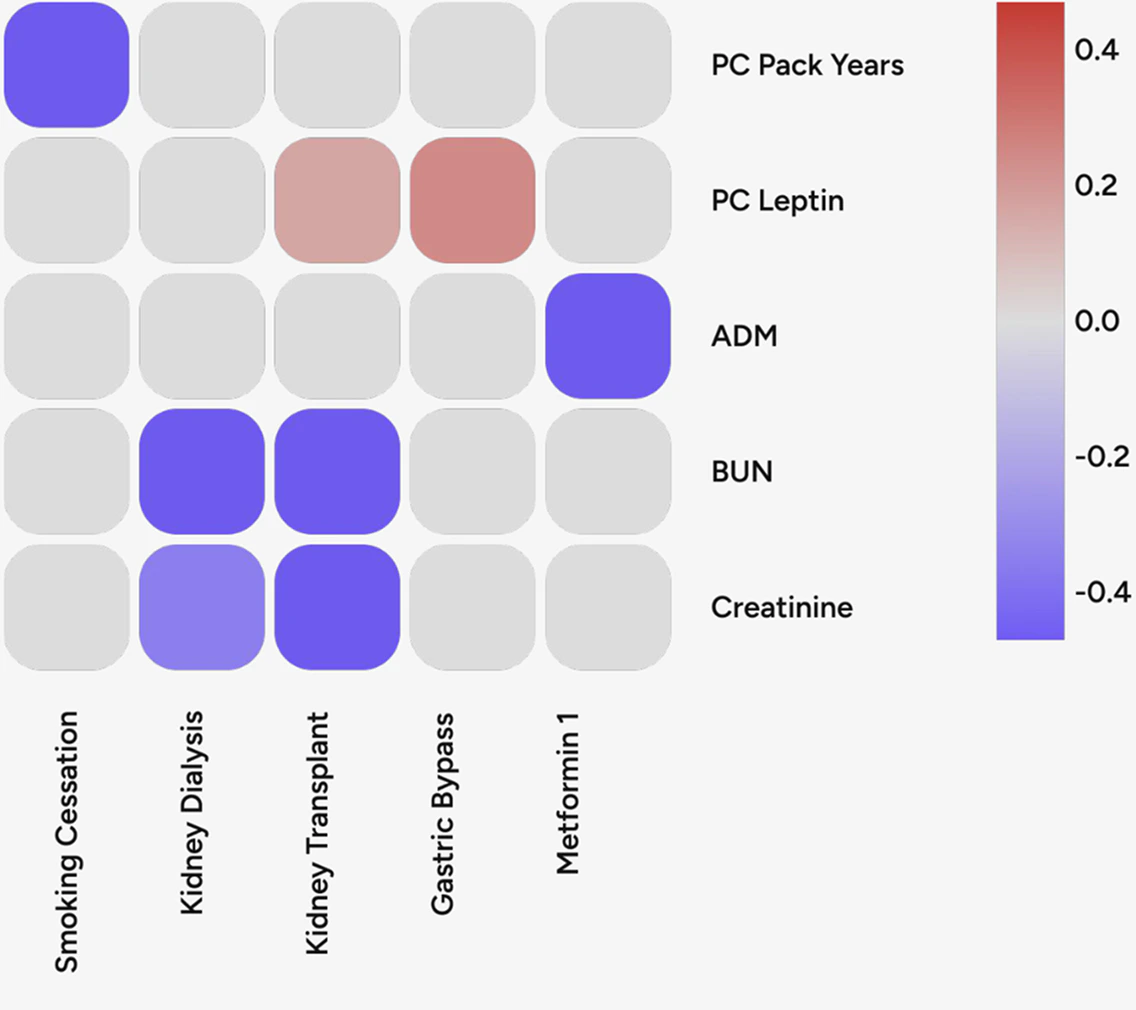
Studies consistently demonstrate higher disease association accuracy with EBPs compared to conventional biomarkers.
EBPs are less influenced by transient biological variability, providing stable and reliable health assessments.
Research such as Dr. Marioni’s Episign scores show EBPs significantly outperform traditional biomarkers in predictive capability.
EBPs represent distinct biomarkers and should not be interpreted using assumptions based on classical biomarkers. Variations between predicted EBP values and traditional clinical lab results are expected.
Nevertheless, EBPs consistently demonstrate associations with diseases similar to their classical surrogates, and in the majority of times, outperform traditional lab results
62% greater accuracy in disease prediction than traditional lab work
64% improved effectiveness in disease diagnosis than traditional lab work
Comprehensive longitudinal insights, reflecting broader biological signals akin to HbA1c in chronic disease management.
Traditional diagnostics often require invasive procedures, complex processing, and costly infrastructure. In contrast, EBPs are collected from a single finger-prick for a fraction of the price.
Greater accuracy in disease prediction than traditional lab work.
Improved effectiveness in disease diagnosis than traditional lab work.
Non-invasive sample collection via finger-prick blood samples.
Simultaneously analyze risk factors for multiple conditions, paving the way for personalized disease prevention strategies.
Cost-effective testing that democratizes access to advanced health insights.
EBPs are not only diagnostic tools, but also a goldmine for researchers. They empower scientists to discover novel biomarkers, identify disease subtypes, and develop targeted therapies from unique insights.
For example, EBPs can distinguish between cardiovascular risks related to high blood sugar and risks linked to high cholesterol, enabling more tailored interventions.
Validation of EBPs across 12 major diseases and all-cause mortality, showcasing robust clinical relevance.
High overall accuracy in detecting deviations from clinical normative ranges.
Specificity in detecting deviations from clinical normative ranges.
Sensitivity in detecting deviations from clinical normative ranges.
TruDiagnostic envisions a world where healthcare is proactive, not reactive. By integrating EBPs into routine clinical practice, the potential exists to revolutionize population health, reduce healthcare costs, and improve outcomes for underserved communities.
Read more about our pre-print on the discovery of EBPs here.